Interested in intermittent fasting for women? It can have great benefits (e.g., hormonal balance, boosted energy levels, improved mental clarity, weight loss and overall well-being). But, it should be done differently for women. Here are starting steps on how to intermittent fast for women, to help decide if it’s right for you.

This post contains affiliate links. Should a purchase be made, Love Beauty Thrive may receive a small commission at no added cost to you. Affiliate disclosure is available here. Thank you.
How to Intermittent Fast for Women
Intermittent fasting can have many benefits for women’s health and wellness. In this blog post, we’ll introduce intermittent fasting, discuss the basics of how to intermittent fast for women (hint – it’s not the same as for men) and suggest starting steps to help you decide if it’s right for you. Start learning more about intermittent fasting today, to discover if this path to health and wellness – and its many potential benefits – is one you’d like to explore further on your journey to greater well-being.
All of the information in this article can provide valuable insight into intermittent fasting for women and its potential benefits. It is provided for general interest, educational and entertainment purposes only, and is not professional or medical advice of any kind. Remember to consult a doctor or health care professional before starting any new dietary or fasting regimen, including intermittent fasting (especially if you have underlying health conditions, questions or concerns).
Remember, every woman and her body is unique – what works for one may not work for another (this applies to intermittent fasting and all of its various types too). Always listen to your body – and to your doctor – when it comes to your health and wellness.
Intermittent Fasting for Women: Beginners’ Tips
Are you ready to learn the basics of how to intermittent fast for women, to see if it’s right for you? If you’re a woman looking to improve your overall health and wellness, intermittent fasting could be a great consideration with many potential benefits. In this article, we’ll gain an introductory understanding of intermittent fasting and it’s benefits, why it should be done differently for women and consider reading trusted books, guides and other credible resources. We’ll also talk about setting your fasting schedule, choosing the right foods, managing hunger and cravings, staying consistent, overcoming challenges and more. All of these starting steps can help you decide if intermittent fasting might be right for you. And if so, you’ll then be in a great place to begin pursuing your understanding of intermittent fasting further and start incorporating it into your life.
And with that, let’s explore the starting steps on how to intermittent fast for women. We’ll start with talking to your doctor . . .
Check with Your Doctor
Before starting any new diet or fasting regimen (including intermittent fasting and its various types), the most important first step is to always check in with your doctor or health care professional to make sure that it’s right for you. As intermittent fasting concerns both what and when you eat, you want to make sure that it’s safe and appropriate for your specific, individual health needs and circumstances before you get started. Your doctor is the best person to guide you.
As mentioned, all information provided in this blog post is for general interest, educational and entertainment purposes only. It is not professional advice of any kind and does not replace any professional health or other advice.
Who is intermittent fasting generally not best suited for? If you are pregnant or breastfeeding, have a history of eating disorders, have certain underlying medical conditions, take certain types of medications or have a high level of physical activity, intermittent fasting is usually not recommended. It is also not typically recommended for children or teenagers. Ask your doctor if you have any questions.
Intermittent fasting might be a great choice for you! If it’s appropriate, you can then explore more on how to intermittent fast for women. With that said, our next starting step is to better understand intermittent fasting. Let’s discuss the basics, and exactly what intermittent fasting is, next . . .
Understand Intermittent Fasting
What is intermittent fasting? Intermittent fasting is a dietary approach (i.e., a way of eating) that involves cycling between periods of eating and fasting – and in some cases, also cycling what you eat – on a particular schedule. Intermittent fasting works by giving your body a break from constant digestion and allowing it to instead enter a state of repair, rejuvenation and greater overall balance. By understanding how to intermittent fast for women, you can tailor your fasting schedule (and also what you eat) to best suit your own unique body, lifestyle, needs, as well as individual health and wellness goals.
Let’s talk about knowing the potential benefits of intermittent fasting for women as the next step.
Know the Benefits of Intermittent Fasting
What are the benefits of intermittent fasting? Intermittent fasting has many potential benefits for women’s health and wellness. It’s quickly becoming recognized as a powerful tool not only for improving physical health but also for enhancing the mind and spirit in several ways too – especially for women. Intermittent fasting is probably best known as an effective weight loss and weight management tool, but it goes well beyond that too. It can also have a profound positive impact on women’s hormones, metabolic health, energy levels, mental clarity and general, overall well-being.
You can read about each of these potential benefits of intermittent fasting in more detail here (in our blog post about the top books on intermittent fasting for women).
In discussing how to intermittent fast for women, it’s important to understand why they should practice it differently than men. Our next step is recognizing intermittent fasting differences for women . . .
Recognize Intermittent Fasting Differences for Women
Due to differences in their hormonal cycles, it is important that women practice intermittent fasting differently than men (i.e., general intermittent fasting guidelines may not apply to women in the same way). Intermittent fasting can be a very effective, beneficial tool for women in improving their overall health and wellness. However, it’s often recommended that it be done in alignment with a woman’s unique hormonal cycle – which varies significantly from that of men, and also from one woman to another. If you’re learning how to intermittent fast for women, this is one of the most important steps and differences to recognize in getting started (and in deciding if it might be right for you).
For example, it’s thought that women’s bodies can be more sensitive to changes in energy intake, which can impact menstrual cycles and overall hormonal balance. As a result, a gentler approach to intermittent fasting is often recommended for women, such as shorter fasting windows (e.g., 14-16 hours), less frequent fasting days or only fasting during certain weeks of the menstrual cycle. Recommendations such as these can help mitigate potential stress, ensuring that the benefits of intermittent fasting are harnessed without disrupting hormonal balance.
It is often suggested, for several reasons, that women do not fast the week before their period. We will talk about this a little more below, in our discussion of selecting a fasting schedule. That said, personalization, listening to one’s body, and consulting with a doctor or healthcare provider are key steps in how to intermittent fast for women, in a way that best supports their unique physiological needs.
In this respect, the next starting step is to thus find credible, reputable resources that you trust to guide you on how to intermittent fast for women specifically. We’ll share with you several of our favorite popular titles next, that you can then review to see if they’re also right for you.
How to Intermittent Fast for Women: Books
Our next starting step? Reading and educating ourselves further with reputable, trusted resources. You’ve now talked with your doctor, know what intermittent fasting is (as well as its potential benefits) and recognize its general differences for women. It’s time to learn even more about how to intermittent fast for women, by reading the books and guides of trusted female leaders in the field. We’ll list for you a few of our favorites, but it’s very important that you choose the authors, books and guides that are best for you and that you trust as credible resources. You can also ask your doctor for recommendations.
Here are a few of the most popular intermittent fasting books for women . . .
FAST LIKE A GIRL

Fast Like a Girl
Dr. Mindy Pelz
Publication Date: December 27, 2022
BUY ON AMAZON
Fast Like a Girl: A Woman’s Guide to Using the Healing Power of Fasting to Burn Fat, Boost Energy and Balance Hormones is an international bestseller written by Dr. Mindy Pelz. At the time of writing, it is an Amazon #1 bestseller in endocrine system diseases. Here is an excerpt from the publisher’s book description of Fast Like a Girl.
A go-to fasting manual created specifically to address women’s needs based on their hormones and menstrual cycle by Dr. Mindy Pelz, a well-known expert on women and fasting, whose fast-growing YouTube channel has become the destination for women who want to learn about fasting. Includes a 30-Day fasting reset that uses the power of your cycle—even if you no longer have one!
Fast Like a Girl (2022)
Read more about Fast Like a Girl on Goodreads.
I’M SO EFFING HUNGRY

I’m So Effing Hungry
Amy Shah, MD
Publication Date: February 28, 2023
BUY ON AMAZON
I’m So Effing Hungry: Why We Crave What We Crave – And What to Do About It is written by Dr. Amy Shah, a leading medical doctor in women’s health. Here is an excerpt from the publisher’s book description of I’m So Effing Hungry.
Amy Shah, MD, leading medical doctor and Instagram personality @fastingmd, shares her proven 5-step program for battling excessive hunger and food cravings by harnessing the power of psychobiotics and intermittent fasting. I’m So Effing Hungry is a complete guide to help you reframe decades-old dieting patterns and stop fighting the scale.
“My mission is to revolutionize the way we think about hunger and nutrition, and to help people manage hunger and cravings and break free from the tyranny of diets and battles with food. I’ve seen my program work for people all over the world. And it will work for you, too.”
I’m So Effing Hungry (2023)
Read more about I’m So Effing Hungry on Goodreads.
I’M SO EFFING TIRED

I’m So Effing Tired
Amy Shah, MD
Publication Date: March 15, 2022
BUY ON AMAZON
I’m So Effing Tired: A Proven Plan to Beat Burnout, Boost Your Energy and Reclaim Your Life is written by Dr. Amy Shah, a leading medical doctor in women’s health. Here is an excerpt from the publisher’s book description of I’m So Effing Tired.
EXHAUSTION DOESN’T HAVE TO BE YOUR NEW NORMAL.
Discover how to conquer burnout and increase energy from a leading medical doctor. Ready to go from feeling effing tired to effing fantastic?Dr. Shah explains how to transform your life by changing:
- What you eat. Increase your vegetable intake and sip Dr. Shah’s hormone-balancing tea to tamp down inflammation and heal your gut, without giving up your wine and chocolate!
- When you eat. Changing when you eat and practicing intermittent fasting—the right way—will help you feel energized all day long.
- How you manage stress. Simple, stress-busting exercises and herbs like ashwagandha and amla berry help calm the adrenal system and ease anxiety.
In just two weeks, you’ll feel your energy surge. In three months, you’ll feel like a whole new person. It’s time to regain the energy you’ve lost, so you can get back to the life you want to live.
I’m So Effing Tired (2022)
Read more about I’m So Effing Tired on Goodreads.
THE GALVESTON DIET

The Galveston Diet
Mary Claire Haver, MD
Publication Date:
BUY ON AMAZON
The Galveston Diet: The Doctor-Developed, Patient-Proven Plan to Burn Fat and Tame Your Hormonal Symptoms is a Wall Street Journal bestseller written by Dr. Mary Claire Haver. At the time of writing, it is an Amazon #1 bestseller in low carbohydrates diets. Here is an excerpt from the publisher’s book description of The Galveston Diet.
A patient-proven eating and lifestyle program to balance nutrition, help manage middle age weight “creep,” and reduce uncomfortable symptoms during menopause and perimenopause—including more than 40 delicious recipes and 6 weeks of meal plans—tailored to women in midlife.
The Galveston Diet (2023)
• Fuel Refocus: Starting in their thirties, women need a specific ratio of healthy fats, lean protein, and quality carbohydrates to optimize their overall health and efficiently burn fat as fuel.
• Intermittent Fasting: 16 hours of fasting with a flexible 8-hour eating window coaxes the body to draw energy from stored fat and decreases inflammation.
• Anti-inflammatory Nutrition: Limit added sugars, processed carbs, chemical additives and preservatives and layer in anti-inflammatory foods like leafy greens, olive oil, berries, nuts, and tomatoes.
With these three principles working together, women can lose the weight they tend to gain in middle age as well as enjoy newfound energy, better sleep, less brain fog, and fewer hot flashes. The Galveston Diet will revolutionize the conversation around health and empowerment during menopause and perimenopause, with health benefits that last a lifetime.
Read more about The Galveston Diet on Goodreads.
NEED MORE INTERMITTENT FASTING BOOKS?
Want more books on how to intermittent fast for women? We’ve got you covered!
Here is our list of other top intermittent fasting books for women that you can review. It’s a list of popular intermittent fasting resources for women, designed to help you decide if it’s right for you. It also covers many of intermittent fasting’s potential benefits in more detail, such as hormonal balance, increased energy levels, improved mental clarity, weight loss and overall well-being.
Now that we’ve reviewed some books and resources (familiarizing ourselves further with how to intermittent fast for women), it’s time to consider your ideal fasting schedule.
Consider Your Ideal Fasting Schedule
At this point in your intermittent fasting journey (and especially after reviewing reputable guides and resources), you’ve likely noticed that there are different types of fasting schedules that you can choose from. Remember that every woman’s body is unique, and one type or schedule may be better suited for you than others.
Here are a few examples of some of the more popular fasting schedules:
- 16/8 Method: Fast for 16 hours each day, eating only during an 8-hour window. Ideal for beginners, it aligns well with natural daily rhythms, supporting hormonal balance, and is generally the most popular fasting schedule.
- 14/10 Method: A gentler approach with a 14-hour fast and a 10-hour eating window, offering flexibility for those who need a less intense fasting experience.
- 5:2 Diet: Eat normally for 5 days of the week, then reduce calorie intake to about 500-600 calories on 2 non-consecutive days. It eases the body into a fasting state without daily restrictions.
- Eat-Stop-Eat: Involve a 24-hour fast once or twice a week, providing a deeper fast without the commitment of daily fasting, allowing for hormonal recovery on non-fasting days.
- Alternate-Day Fasting (ADF): Alternate between days of normal eating and days of limited calorie intake (about 500 calories). This method requires careful monitoring to ensure it supports, rather than stresses, hormonal health. It is one of the less popular variations.
- Warrior Diet: Follow a 20-hour fast followed by a 4-hour eating window in the evening, focusing on whole foods. This pattern mimics ancient eating rhythms, potentially supporting women’s natural hormonal cycles. It is one of the less popular variations.
Each of these methods can be adjusted to individual needs and responses, emphasizing the importance of listening to your body and consulting with a healthcare provider before starting to tailor the approach (especially if considering more intense fasting schedules, always talk to your doctor first).
When setting your fasting schedule, it’s important to consider your daily routine, work schedule and personal preferences (as well as your doctor’s advice). Some women prefer to fast in the morning and afternoon, while others may prefer to skip dinner. You can also experiment with different fasting windows to see what works and feels best for you, and fits most seamlessly into your everyday lifestyle. By finding a fasting schedule that aligns with your regular routine, you’ll be more likely to stick with it consistently and see the results that you’re hoping for.
When it comes to setting your ideal fasting schedule, it is also important to note that many intermittent fasting resources for women suggest that you do not fast in the week before your period (to maintain better hormonal balance among other reasons). In learning how to intermittent fast for women, you may wish to consult these resources for more information while keeping this in mind.
This leads us to the next step in how to intermittent fast for women, choosing the right foods.
Choose the Right Foods for You
As we’ve learned, intermittent fasting involves cycling between periods of eating and fasting, often on a particular schedule. Some types of intermittent fasting plans cycle not only when you eat, but also what you eat (e.g., emphasizing different types of foods at different times of day or even at different weeks of the menstrual cycle). If you’d like to learn the specific details, you can find many of these books at your local library, bookstore and available to buy on Amazon.
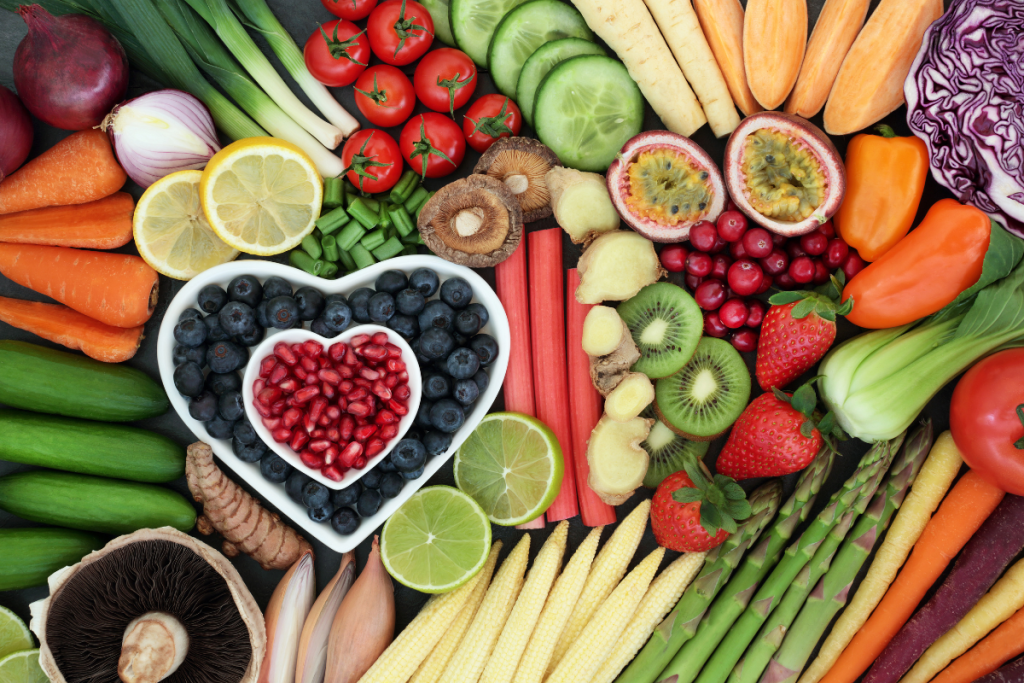
Generally, you’ll find that nutrient-dense whole foods are most often recommended. Lean proteins, healthy fats, fruits, vegetables and whole grains are all healthy choices that nourish your body and keep you feeling satisfied. Many of these foods are those included in the Mediterranean diet, one of the healthiest ways of eating in the world. Eating fermented/probiotic-rich foods is also recommended on many popular intermittent fasting plans for women. Avoid highly-processed, sugary, and very high-calorie foods that may spike your blood sugar levels and leave you hungry again shortly after eating.
By fueling your body with wholesome, nutritious foods during your eating window, you’ll not only support your overall health in the best way, but also help to manage your hunger and cravings more effectively. A mindful approach to choosing the right foods sets you up for success in practicing how to intermittent fast for women, helping you stay on track towards your wellness goals.
After choosing the right foods for you, the next step is all about understanding ways to manage hunger and cravings. Let’s talk about that next . . .
Manage Hunger and Cravings
One of the challenges in learning how to intermittent fast for women is managing hunger and cravings. It’s very important to listen to your body’s signals and fuel it with healthy, nutrient-dense foods during your selected eating window. Choosing the right foods for you comes into play here once again. Lean proteins, healthy fats, fruits, vegetables, whole grains, etc. (as also suggested above), can help keep you feeling satisfied and prevent hunger pangs.
Additionally, staying hydrated and incorporating fibre-rich foods into your meals can also help you curb cravings and keep you feeling full much longer. Mindfulness of food choices is key not only with respect to nutrition, but also for managing hunger and cravings.
As you continue learning how to intermittent fast for women, it’s important to remember that consistency is key in seeing results and overcoming any challenges that might arise on your health and wellness journey. We’ll dive into that next . . .
Stay Consistent and Overcome Challenges
Staying consistent with intermittent fasting can sometimes be challenging, especially for beginners who are learning – but it’s not impossible! Remember to strive for consistency, not perfection. Keep trying and don’t give up, always being kind to yourself (it’s not meant to be or feel stressful in any way, give yourself lots of understanding as you learn).
It can help to understand that the key in staying consistent lies in setting realistic goals, embracing flexibility and refining your practice where necessary. For women, it’s particularly important to always listen to your body (and your doctor) and adjust your fasting schedule as needed, especially where appropriate during the menstrual cycle and during times of any stress. Taking care of yourself is always the most important thing.
Overcoming challenges often means being patient, understanding and flexible with yourself. Gradually ease yourself into fasting, and find a routine that fits with your own unique lifestyle. It is worth saying again that consistency is not about perfection; it’s about making gradual, sustainable changes that support your health and wellness.
In learning how to intermittent fast for women, these recommendations on staying consistent, overcoming challenges and being patient with yourself are some of the most valuable to keep in mind.
Is Intermittent Fasting Right for You?
As we’ve learned, intermittent fasting can have amazing benefits for many women. But deciding whether intermittent fasting is right for you is a personal choice that should be made after thorough research, education, and most importantly, talking with your doctor.

It’s essential to gather and review information from credible, reliable sources that you trust, and consider how the different fasting methods – including how to intermittent fast for women specifically – align with your unique lifestyle, health goals, and any existing medical conditions or concerns. Talking with your doctor or healthcare professional is very important to ensure that intermittent fasting is a safe and appropriate choice for your specific needs and health scenario. Remember, what works wonders for one person may not be the best choice or suitable for another. You have to do what’s best for you and your unique body.
It’s valuable to also recognize the many potential benefits that intermittent fasting can have for your health, and specifically for women’s health. Many women find intermittent fasting to be a highly effective and healthy lifestyle change that boosts their overall well-being in several different ways. Listen to your body – and your doctor – and choose a fasting approach that feels sustainable, supportive and right for your well-being. Your body and health journey are unique, and finding a method that fits seamlessly into your life, and that feels great to you, is key to long-term success and satisfaction.
How to Intermittent Fast for Women
Intermittent fasting can be a powerful took for women looking to improve their health and achieve their wellness goals. By understanding the basic principles of intermittent fasting for beginners, it’s many potential benefits, and how to intermittent fast for women specifically, you can get started in deciding whether or not it’s right for you. Quality books and resources can also help you on your intermittent fasting journey. Setting a fasting schedule that works for you, making smart food choices, managing hunger and cravings, and staying consistent to overcome challenges, can be the next starting steps in first successfully considering, and then incorporating, this practice into your lifestyle – should it be a good option for you. Get started learning more about about intermittent fasting today, and you just might watch your health soar to new heights.
Follow on Pinterest
We love connecting with you, and we love Pinterest (and we hope you loved reading about how to intermittent fast for women)! You can follow Love Beauty Thrive on Pinterest here. Save this post for later using this pin. As always, thanks so much for reading, and for all the love!
You May Also Like
Top Books on Intermittent Fasting for Women
10 Mediterranean Diet Principles for Beginners
The Best Superfoods to Eat that Actually Taste Good
The Blue Zone Kitchen Cookbook (And 7 More)
6 Fundamental Principles Every Keto Diet Beginner Needs To Know
7 Comprehensive Books That Are Ultimate Guides To The Keto Diet
25 Easy Ways To Drink More Water
5 Easy Recipe Cookbooks To Start Eating Better Today